Introduction
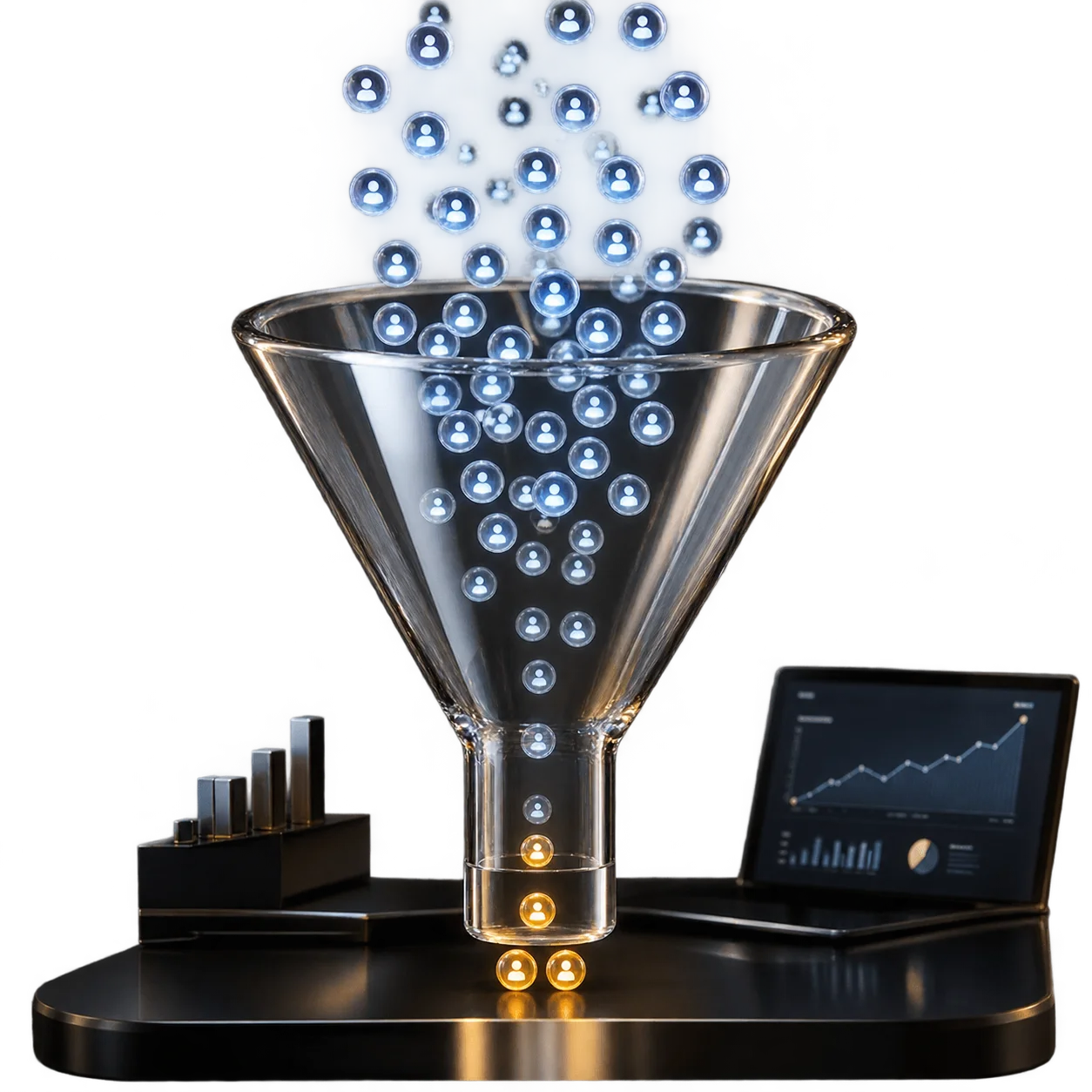
Traffic feels like progress. Rankings improve, more people reach the website and analytics charts begin to move in the right direction. Yet the phone stays quiet, forms are rarely submitted and sales teams say the leads are not suitable.
This is not always an SEO failure. A website can attract visitors and still make it difficult for them to understand the offer, trust the business or take the next step. Conversion rate optimisation services examine what happens after the click and remove barriers that stop useful action.
The aim is not to pressure every visitor into becoming a lead. It is to help the right visitor move forward with confidence. These nine problems are a practical place to begin.

1. The traffic does not match the offer
A high visitor count can hide weak intent. A software company may rank for broad educational terms while offering a high-value enterprise service. A local provider may receive international traffic it cannot serve. A product page may attract people searching for a free template.
Technical SEO services should start by comparing search queries, landing pages and actual enquiries. Google Search Console can show which terms generate impressions and clicks. Analytics can show which pages those visitors enter and what they do next.
Look for patterns. If a blog attracts significant traffic but no commercial action, that may be acceptable when it supports awareness or links to a relevant next step. If a service page attracts the wrong audience, its keyword targeting and copy may need to change.
2. The value proposition is unclear
Visitors should not need to decode the hero section. Within a few seconds, they should understand what the company provides, who it helps and why the offer may be relevant.
Generic statements such as “innovative solutions for a changing world” create little meaning. A clear statement such as “bespoke workflow software for UK logistics teams” gives the visitor a useful frame immediately.
The opening section should answer:
- What is this?
- Is it for a business like mine?
- What problem does it solve?
- What should I do next?
This does not mean turning the heading into a long list of keywords. The headline can be human and memorable, while the supporting text adds service and audience detail.
3. The page offers too many competing actions
A visitor may be asked to book a call, download a guide, join a newsletter, watch a video, view every service and follow four social channels within the same screen.
Choice can feel useful, but too many equal options weaken the main journey. Each page should have one primary action that matches its purpose. A service page may lead to a consultation. A product page may lead to purchase. A comparison article may lead to a relevant service or checklist.
Secondary actions can still exist, but they should not compete visually with the main one.
Button text should also set an expectation. “Submit” tells the visitor very little. “Book a 30-minute call” or “Request a website review” is clearer.
4. The website feels slow or unstable
People notice delay before they understand its cause. Large hero videos, uncompressed images, excessive scripts, poor hosting and badly implemented animations can make a page feel heavy.
Layout shifts are equally frustrating. A visitor moves to press a button, then an image loads and the button jumps. Slow response after a click can make the site appear broken.
Google’s Core Web Vitals focus on loading performance, responsiveness and visual stability. These measurements are useful because they reflect common user frustrations, but they should be combined with real device testing.
A core web vitals optimisation service should not chase a perfect laboratory score while ignoring real journeys. Start with high-value landing pages, forms, checkout and mobile traffic. Remove scripts that do not justify their cost, serve correctly sized images and monitor field data where available.
5. The mobile experience is treated as a smaller desktop site
Mobile visitors may represent most of the traffic, yet the page is often designed on a large screen and checked on a phone at the end.
Common mobile problems include:
- Headings that take over the first screen.
- Buttons placed too close together.
- Forms that require excessive typing.
- Sticky elements that cover content.
- Tables that cannot be read.
- Pop-ups that are difficult to close.
- Phone numbers that are not clickable.
A useful mobile page respects how people browse. They may be travelling, comparing providers between meetings or using one hand. The main information and action should remain easy to reach.
6. There is not enough proof
A visitor is being asked to take a risk. They may share contact details, spend money or begin a project that affects their business. Claims such as “trusted experts” do little to reduce that risk unless evidence supports them.
Useful proof includes:
- Relevant case studies.
- Specific customer quotes.
- Before-and-after examples.
- Recognised accreditations.
- Clear process information.
- Named team expertise.
- Verified performance results.
- Answers to practical objections.
Proof should appear near the point where doubt is likely. A testimonial hidden at the bottom of a long page may never be seen. An ecommerce page can show delivery and returns information close to the purchase button. A service page can place a relevant project example beside the enquiry section.

7. The form asks for too much too soon
Forms often reflect the information a business would like, not what a visitor is ready to provide.
A first enquiry may only need a name, work email, company and short description. Asking for budget, team size, turnover, full address and detailed project specifications can feel intrusive before any relationship exists.
Every field should have a reason. Remove information that can be collected during a follow-up conversation. Use clear labels, helpful error messages and suitable input types. On mobile, the correct keyboard should appear for phone numbers and email addresses.
Trust matters too. Explain what happens after submission and how quickly the business usually responds. A simple line such as “We will review your enquiry and reply within one working day” reduces uncertainty.
8. The content does not continue the promise of the search result
A visitor clicks because the title or advert creates an expectation. If the landing page changes the subject, hides the answer or opens with generic brand language, the journey feels broken.
For example, someone searching for “technical SEO audit London” should reach a page that explains the audit, what it covers, who it is for and how to request one. Sending that person to a broad agency homepage forces them to search again.
The same applies to paid campaigns, social posts and AI optimised website design. The language, offer and visual context should continue from the source to the landing page.
9. Tracking is incomplete or misleading
A business may believe the website is not generating leads when the tracking is simply missing them. Calls, email clicks, chat conversations, calendar bookings and downloaded proposals may sit outside the main form report.
The opposite also happens. A thank-you page refresh may count several conversions. An internal team may trigger events during testing. A form may fire a success event even when the submission fails.
Create a measurement plan around meaningful actions. In Google Analytics, important events can be marked and used for conversion reporting. Test them across devices and forms. Connect lead data to the CRM where possible so the business can assess quality, not only quantity.
Final takeaway
More traffic does not automatically create more leads. The website must attract the right audience, explain the offer clearly, feel trustworthy and make the next step easy.
Conversion rate optimisation is most effective when SEO, design, development, content and measurement work together. EMPWR3D provides conversion rate optimisation services alongside technical SEO and custom web development services for UK businesses. Speak to the team if your website is visible but not producing enough suitable enquiries.
Frequently Asked Questions.
Q1. Why does my website get traffic but no leads?
A website can get traffic but generate few leads when visitors have low purchase intent, the value proposition is unclear, calls to action are weak, forms are too complicated, trust signals are missing or the landing page does not match the search intent.
Q2. What is conversion rate optimisation and how can it increase leads?
Conversion rate optimisation (CRO) improves a website so more relevant visitors complete valuable actions such as submitting a form, booking a consultation or making a purchase. Conversion rate optimisation services use analytics, user behaviour and landing-page improvements to identify and remove conversion barriers.
Q3. What are the most common CRO problems on a website?
Common CRO problems include unclear messaging, poor traffic-to-page relevance, too many calls to action, slow page speed, weak mobile usability, insufficient trust signals, lengthy forms, poor search-intent matching and inaccurate conversion tracking.
Q4. How do I improve my website conversion rate?
Start by identifying high-traffic pages with low conversions, checking search queries and landing-page relevance, improving the value proposition, simplifying forms, strengthening calls to action, adding relevant proof and fixing mobile and performance issues. Track qualified leads to measure the impact.
Q5. When should a business invest in conversion rate optimisation services?
Businesses should consider conversion rate optimisation services when their website receives relevant traffic but produces too few enquiries, bookings or sales. CRO can be particularly valuable when SEO and paid campaigns are already generating visitors but conversion performance remains weak.